

Moving house is one of the most exciting things you can do — and one of the most stressful. Most people underestimate how much is involved until they’re knee-deep in half-packed boxes at 11pm the night before. The good news? A little planning goes a very long way. These 15 moving house tips will help you stay organised, protect your belongings, and actually enjoy the process of starting fresh in a new home.
Whether you’re moving across the street or across the country, this guide covers everything from building your moving house checklist to smart moving house tips for packing that the professionals swear by.
Ready to make your move easy?
Get a free, no-obligation quote from Two Men and A Truck today. Call 1300 880 412 or Get a Quote Online →
Your Complete Moving House Checklist: Where to Start
Before we get into the tips, here’s a quick snapshot of what a well-organised move looks like from start to finish. Use this as your moving house checklist reference point throughout the article.
| Timeframe | Key Tasks |
| 8 weeks out | Book removalists, start decluttering, notify employer |
| 6 weeks out | Source packing materials, start packing non-essentials |
| 4 weeks out | Update address with ATO, Medicare, bank, subscriptions |
| 2 weeks out | Arrange utilities, confirm removalist booking |
| 1 week out | Pack almost everything, clean out fridge and pantry |
| Moving day | Essentials box ready, do final walk-through |
| After the move | Update electoral roll, get to know your new neighbourhood |
Tip 1: Book Your Removalist Early — Especially in Summer
This is probably the most important home moving tip on this list. Professional removalists in Australia book out fast, particularly during December–February and over school holidays. If you’re moving in peak season, you could be waiting weeks for availability.
Book at least 6–8 weeks in advance for a weekend move. If you can be flexible and move mid-week, you’ll often save money and get your preferred time slot without any fuss.
Look for a removalist company that is a member of the Australian Furniture Removers Association (AFRA). AFRA membership means the company has met industry standards for insurance, training, and equipment — giving you genuine peace of mind on moving day.
Why Choose an AFRA-Accredited Removalist?
Tip 2: Declutter Before You Pack a Single Box
One of the biggest mistakes people make when moving house is packing everything they own and dealing with the clutter at the other end. The problem? You pay to move things you don’t want — and then pay again when you run out of space in your new home.
Walk through every room four to six weeks before your move and sort items into three piles: keep, donate, and throw out. Facebook Marketplace, Gumtree, and local charity shops like Vinnies or the Salvos are great options for items that still have life in them.
The less you move, the cheaper and faster the whole process becomes.
Things to Leave Behind When You Move House
Tip 3: Use the Right Boxes — Size Really Does Matter
One of the most overlooked moving house tips for packing is using the right box for the right items. Using random supermarket boxes or boxes that are too big can result in damaged goods and back strain from lifting.
Here’s a general guide:
| Box Size | Best Used For |
| Small (book box) | Books, heavy items, canned goods, tools |
| Medium | Kitchenware, small appliances, toys, shoes |
| Large | Pillows, doonas, towels, light bulky items |
| Wardrobe box | Hanging clothes — keeps them wrinkle-free |
| Picture/mirror box | Artwork, mirrors, frames |
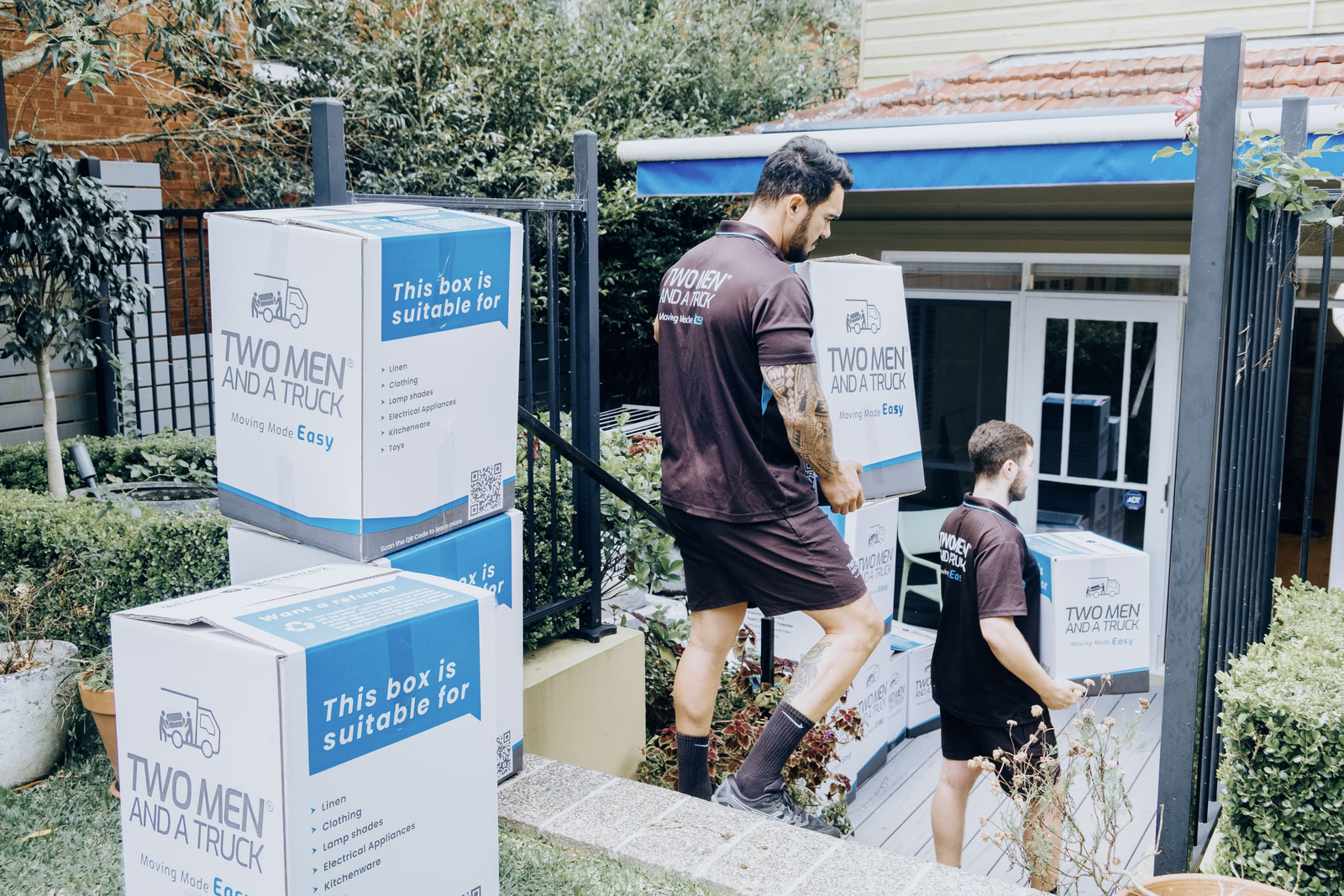
At Two Men and A Truck, we supply quality, eco-friendly moving boxes in a range of sizes. They’re sturdier than most supermarket boxes and better for the environment too.
Tip 4: Start Packing Rooms You Use the Least
You don’t need to start with the kitchen or bedroom — those come last. Start with the spaces you use least often: the spare room, the garage, the attic, or the formal dining area that only sees action on Christmas Day.
Pack these early — up to six weeks out — and you’ll feel far more in control as moving day approaches. By the final week, you should really only have your daily essentials left to box up.
Tip 5: Label Every Box (Properly)
Labelling sounds obvious, but most people do it poorly. Writing “kitchen” on a box tells the removalists where to put it — but won’t help you when you’re searching for the coffee plunger at 7am on your first morning.
A better system:
- Write the room on all four sides and the top
- Note 2–3 specific contents (e.g. “Kitchen — coffee, mugs, kettle”)
- Use coloured tape or markers — one colour per room
- Mark fragile boxes clearly with “FRAGILE — THIS WAY UP” on multiple sides
This small effort saves hours of frustration when you’re unpacking.
Tip 6: Pack an Essentials Box and Keep It With You
Pack a separate “essentials” box — or bag — for the things you’ll need in the first 24 hours at your new home. This box should travel in the car with you, not on the truck.
Suggested contents:
- Phone chargers and laptop charger
- Toilet paper, hand soap, basic toiletries
- A change of clothes and pyjamas
- Bed linen for one bed
- A couple of mugs, teabags or coffee, and a kettle
- Snacks and water bottles
- Any medications
- Important documents (passports, lease, settlement papers)
- Kids’ comfort items or toys
When you arrive exhausted at the end of the day, you’ll be very glad you did this.
Tip 7: Photograph Everything Before You Dismantle It
Before you pull apart your TV entertainment unit, disassemble the kids’ bunk bed, or unplug all the cables behind your computer setup — take a photo. It sounds simple, but most people forget and then spend two hours trying to remember which cable goes where.
Photos also come in handy if anything is damaged during transit — you’ll have clear evidence of the item’s pre-move condition.
Tip 8: Protect Fragile Items the Right Way

Packing fragile items properly is one of the most important moving house tips for packing. Breakages during a move are almost always caused by insufficient cushioning or boxes that are too loosely packed.
Do this instead:
- Wrap each item individually in packing paper (not newspaper — the ink transfers)
- Use bubble wrap for extra fragile pieces like glasses, ceramics, and electronics
- Fill any gaps in boxes with scrunched packing paper or foam peanuts — boxes shouldn’t rattle when you shake them
- Never stack heavy items on top of fragile ones
- Label the box “FRAGILE” on all sides
Using the Right Packing Materials to Make Moving House Easier
Don’t want to pack yourself? Two Men and A Truck offers professional packing services — we’ll take care of everything so you don’t have to lift a finger. Call 1300 880 412 or Book Packing Services →
Tip 9: Update Your Address Well Before Moving Day
Changing your address is easy to forget in all the chaos — but the consequences can be annoying and sometimes costly. Give yourself at least four weeks to work through the list.
Key organisations to notify:
- Australian Taxation Office (myGov)
- Medicare and private health insurer
- Your bank and credit card providers
- Superannuation fund
- Electoral Commission (AEC)
- Australia Post (set up mail redirection as a safety net)
- Centrelink (if applicable)
- Your employer and payroll
- GP and other health practitioners
- Children’s school or childcare centre
- Vehicle registration (your state’s transport authority)
- Insurance providers (home, car, life)
Who Do I Need to Tell When I Move House?
Tip 10: Sort Out Your Utilities Before You Move
Few things are worse than arriving at a new home and having no power, no internet, or no hot water. Organise your utilities at least two weeks before moving day.
What to action:
- Electricity and gas: Contact your provider to disconnect at the old address and connect at the new one on moving day — or the day before
- Internet: ISPs often need 1–2 weeks to set up a new service; don’t leave this until the last minute
- Water: In most Australian states and territories, water is managed through the local council or water authority — contact them to transfer the account
- Phone: Update your billing address with your telco
If you’d prefer to handle all your utility connections in one go, Two Men and A Truck offers a free utility connection service through our partnerships with providers.
Tip 11: Prepare Your Appliances Properly
Appliances need a bit of attention before moving day. Skipping this step can result in water damage, leaks, or even voided warranties.
- Fridge and freezer: Defrost and clean at least 24 hours before the move. Wipe dry. Leave doors slightly ajar during transit.
- Washing machine: Disconnect the hoses and drain fully. Many machines have transit bolts — check your manual.
- Dishwasher: Run an empty cycle, disconnect water supply, and drain.
- BBQ: Empty and clean the gas bottle. In most states, removalists cannot legally transport LPG bottles — arrange to dispose of or transport these separately.
Reduce Damage to Appliances by Preparing Them Properly Before Moving Day
Tip 12: Think About What Goes on the Truck Last (And Off First)
The order in which items are loaded and unloaded matters more than most people realise. As a general rule: the last things loaded onto the truck should be the first things you’ll need — your bed, kettle, and essentials.
Work with your removalists to plan this. Professional movers know how to pack a truck efficiently to prevent items shifting and damaging each other in transit.
Heavy, solid items like bookcases and white goods go in first against the walls. Fragile boxes and lighter items stack on top and towards the back.
Tip 13: Consider Moving Midweek or Off-Peak
This is one of those home moving tips that can genuinely save you money. Weekend moves are the most popular — and the most expensive. Many removalist companies charge a premium on Saturdays, and traffic can add significant time to the job.
If you can take a day off work and move on a Tuesday or Wednesday, you’ll likely pay less and have your pick of time slots. You’ll also have a less stressed moving team who haven’t already done two jobs before yours.
Should You Move on a Weekend or a Weekday?
Tip 14: Take Care of Yourself (and the Kids and Pets) on the Day
Moving day is physically and emotionally demanding. People often forget to eat, drink water, or take breaks — and then hit a wall mid-afternoon when there’s still half a truckload to go.
A few practical ideas:
- Eat a proper breakfast before the chaos begins
- Have snacks, water, and a cooler bag of drinks easily accessible
- Arrange for kids to stay with grandparents or friends for the day — they’ll be safer and you’ll be more efficient
- Pets should be kept in a quiet room or with a trusted person. Moving can be distressing for animals, and an open front door is a serious risk.
Tips for Moving House with Pets
Tip 15: Do a Final Walk-Through at Both Properties
Before you hand over the keys to your old home, do a thorough walk-through. Check every room, every cupboard, the garage, the garden shed, the letterbox, and under every bed. It’s surprisingly common to leave things behind in the rush.
Don’t forget to check:
- Loft/roof cavity storage
- Built-in wardrobes (especially top shelves)
- Medicine cabinets
- Under sinks
- Outdoor areas — bikes, hoses, pot plants, letterbox keys
- Meter boxes (check for any personal documents)
Then do the same when you arrive at your new home. Before the removalists leave, check that all furniture is in the right room and that nothing appears damaged.
Moving House Cost Breakdown: What to Budget For in 2026
Moving costs in Australia vary depending on the size of your home, how far you’re moving, and what services you choose. The figures below are indicative estimates based on industry ranges — actual quotes will vary. Always get at least two or three written quotes to compare.
| Move Type | Estimated Cost Range (AUD) |
| 1–2 bedroom apartment, local move (2–4 hrs) | $500 – $1000 |
| 3 bedroom house, local move (4–6 hrs) | $1000 – $1,600 |
| 4+ bedroom house, local move (6–8+ hrs) | $1,500 – $2,500 |
| Interstate move (Sydney to Melbourne, 3 bed) | $2,500 – $5,000+ |
| Professional packing service (full home) | $400 – $1,200 |
| Packing materials (boxes, tape, wrap) | $100 – $400 |
| Storage (per week, standard unit) | $40 – $150 |
These are approximate figures only. Costs depend on volume of goods, access difficulties, stairs, long carry distances, and specific services requested. Request a personalised quote for an accurate figure.
Step-by-Step Moving Process: How It Works With Two Men and A Truck
Here’s what a smooth, professionally managed move looks like from first contact to unpacking:
Step 1: Request a Quote Contact Two Men and A Truck by phone or online. Describe your home size, the distance of the move, and any specific requirements (stairs, piano, fragile artwork, etc.).
Step 2: Confirm Your Booking Once you’re happy with the quote, confirm your moving date and time. You’ll receive confirmation and a pre-move checklist to help you prepare.
Step 3: Pack (Or Let Us Pack) You can pack yourself using our guide, purchase packing materials from us, or book our professional packing service. We’ll handle your goods as if they were our own.
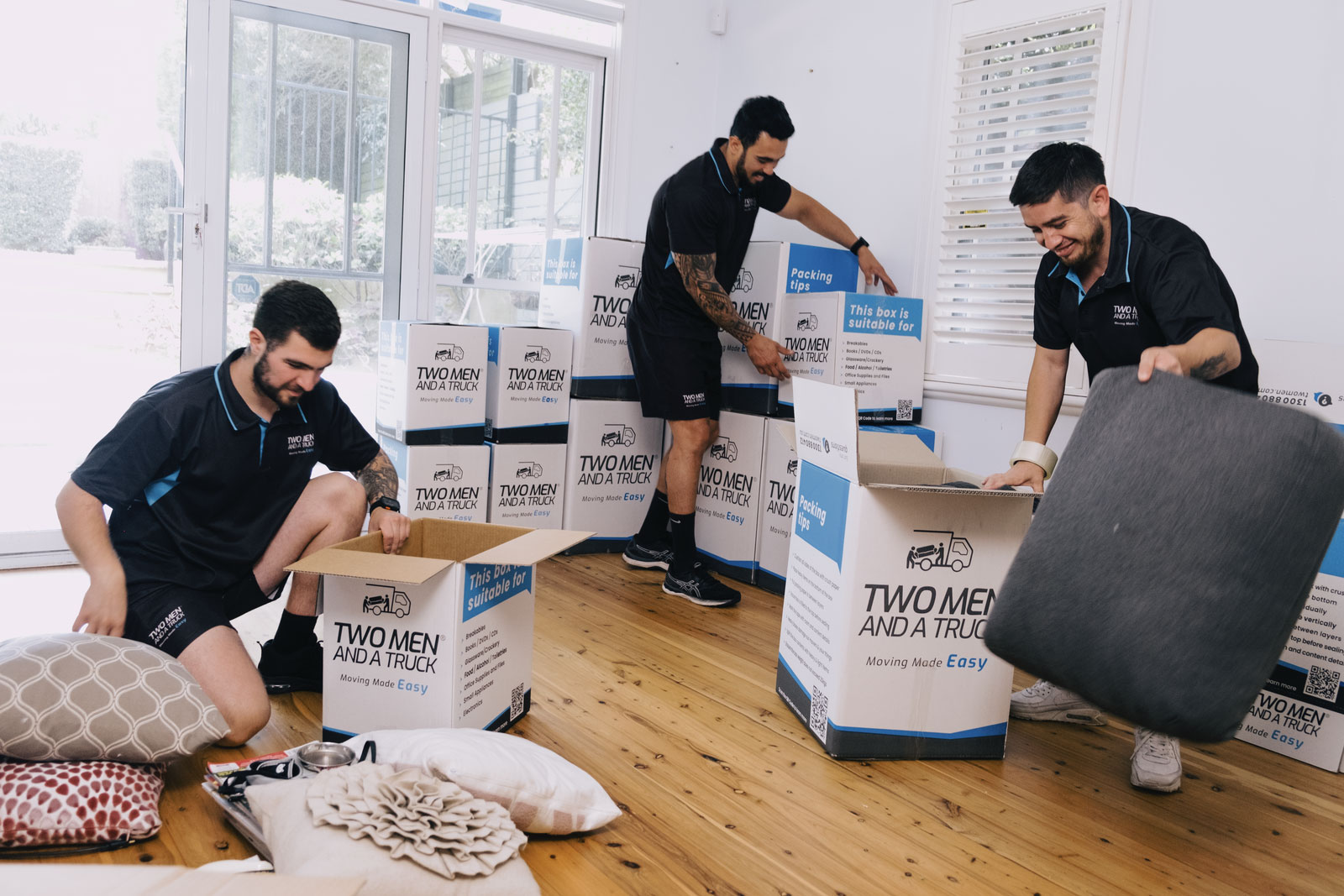
Step 4: Moving Day Our trained crew arrives on time with a clean, well-equipped truck. They’ll protect your floors and doorframes, wrap your furniture, and load everything carefully.
Step 5: Delivery and Placement At your new home, the team places items in the rooms you specify. They’ll reassemble furniture if required.
Step 6: Final Check Before the crew leaves, do a quick walk-through together to make sure everything is in order and nothing has been missed.
Common Mistakes to Avoid When Moving House
Even with the best intentions, people make the same errors repeatedly. Here are the ones worth knowing about before you start.
Leaving packing too late. Most people underestimate how long packing takes. A three-bedroom house typically takes 20–40 hours of packing time. Start well in advance.
Packing boxes too heavy. It’s tempting to fill large boxes completely — but a box of books that two people can barely lift is unsafe and often damages the box. Keep heavy items in small boxes.
Not getting transit insurance. Most quality removalists carry basic coverage, but it may not cover the full replacement value of your belongings. Ask specifically what is and isn’t covered, and consider taking out additional coverage for high-value items.
Forgetting to measure furniture. Always measure your new home’s doorways, hallways, and staircases before moving day — especially for large pieces like sofas, beds, and fridges. Finding out something doesn’t fit on the day is expensive and stressful.
Not keeping important documents accessible. Passports, lease or purchase agreements, birth certificates, and financial documents should travel with you — not in the removalist truck.
Skipping the defrost. Putting a fridge or freezer on the truck without defrosting it first can result in water damage to your other belongings. Defrost at least 24 hours before moving day.
Frequently Asked Questions About Moving House
- How far in advance should I book a removalist in Australia?
For a standard local move, booking 4–6 weeks ahead is usually enough. For peak periods — December, January, and school holidays — aim for 8–10 weeks minimum. Interstate moves can book out even further in advance. - Should I pack myself or use a professional packing service?
It depends on your budget, timeline, and how much you value your time. Professional packing is faster, uses proper materials, and often means fewer breakages. It also typically means your goods are better covered under the removalist’s insurance. If you have a lot of fragile or high-value items, professional packing is worth considering. - What items can’t be put on a removalist truck?
Most removalists will not transport LPG gas bottles, flammable or corrosive liquids, ammunition, dangerous chemicals, and certain plants or food. Check with your specific removalist ahead of time. A full list of restricted items is worth reviewing before packing day. - How do I reduce the cost of moving house?
Move mid-week if possible, declutter before packing (so you move less), do your own packing, and be flexible with your moving date. Also avoid peak season moves (December–February) where possible. Getting multiple quotes also helps you get the best price. - What’s the best way to pack fragile items?
Wrap each piece individually in packing paper — not newspaper — and add a layer of bubble wrap for anything particularly delicate. Fill gaps in boxes with scrunched paper so nothing moves around. Mark all sides of the box as fragile. - How do I get my full bond back when moving out of a rental?
Clean the property thoroughly and address any damage before your final inspection. Take photos of every room at the end of your tenancy. Make sure you’ve addressed everything on the original condition report. Returning the home to the same condition (allowing for fair wear and tear) is the standard required in most Australian states.
A Guide to Getting a Full Bond Refund
DIY vs Professional Removalists: A Comparison
| Factor | DIY Move | Professional Removalist |
| Cost | Lower upfront (hire truck + fuel) | Higher upfront, lower risk overall |
| Time | Significantly more of your time | Efficient — often done in half the time |
| Physical effort | High — you do all the heavy lifting | Minimal — the team handles it |
| Risk of damage | Higher | Lower — trained handlers + equipment |
| Insurance | Typically none | Covered under removalist’s policy |
| Stress level | High | Much lower |
| Best for | Small, local moves with minimal furniture | Most households, interstate moves |
Ready to book your move?
Two Men and A Truck has been helping Australians move home for decades. Our trained, professional teams handle your belongings with care — every single time. Call 1300 880 412 | Get Your Free Quote →